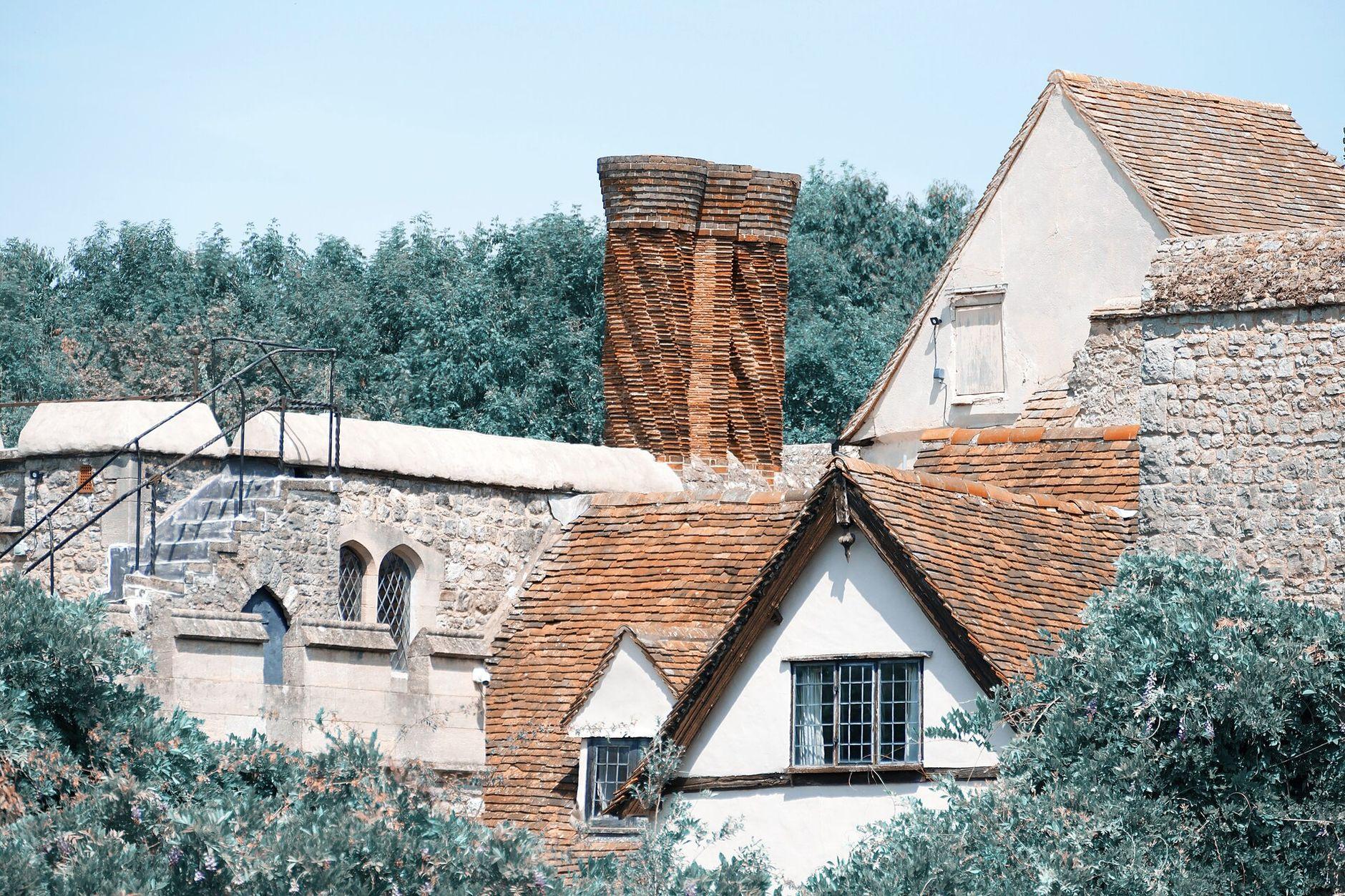
The part of an insert nobody sees
When owners in Carson choose a gas or wood insert, the talk is about the glass, the frame and the flame. The part that decides whether it works is out of sight: a stainless liner that runs from the top of the insert to the top of the chimney. An insert without a liner sized to it can draft poorly, stain the new face, and send exhaust into an old flue that was built for a very different fire.
Stuart Chimney Experts fits liners as part of insert remodels and as a job on their own. This post covers what the liner does, the choices, and what sets the quote.
Why the old flue is not enough
Many masonry chimneys in Carson were built with clay tile flues sized for an open fireplace. That opening is wide, and the flue is big to match. An insert has a small outlet and cooler exhaust. Sent into a big clay flue, that exhaust slows down, cools and condenses on the tile. Over the years it eats at the mortar joints and can leak through cracks. A liner sized to the insert outlet keeps the exhaust moving and carries it all the way out.
There is a second reason. Clay tiles crack in earthquakes. The 1987 Whittier Narrows and 1994 Northridge quakes both left chimneys across the county with broken tiles inside brick that looked sound from the street. A stainless liner runs past those cracks as one continuous pipe.
The choices
- Rigid stainless. Straight sections, for flues that run straight from the firebox to the top. Stiff and smooth inside.
- Flexible stainless. Corrugated pipe that follows offsets and bends. The usual choice for inserts in older chimneys.
- Insulated liner. Either type wrapped in an insulation blanket, where the space around the pipe and the distance to framing call for it.
- Poured liner. A mortar mix cast around a form inside the flue. Used on rebuilt or badly damaged flues, more involved, and quoted separately.
For gas inserts the liner is often a pair of pipes, one bringing outside air down and one taking exhaust up, so the insert runs sealed off from the room.
Wood inserts need a liner too
A wood insert is a steel stove that sits in the firebox, with a door instead of an open front. It burns hotter and cleaner than an open fire, but its smoke still cools on a big clay flue and leaves creosote. A stainless liner sized to its outlet keeps the draft strong and makes sweeping simpler, because the brush runs down a smooth pipe instead of rough tile. Wood inserts in Los Angeles County also have to fit within the South Coast AQMD wood-burning rules, so we confirm the model before quoting. For many owners in Carson, that is the point where a gas insert becomes the simpler plan.
What the liner connects to
At the bottom, the liner joins the insert outlet with a connector, and the throat above the insert is often closed with a block-off plate so warm room air does not leak up the chimney around the pipe. At the top, it ends in a cap with a plate that seals the old flue. That cap matters in Carson, where marine air off the harbor rusts plain steel; we use stainless.
What sets the quote
Liner work is quoted in writing after the flue has been seen by camera. The figure moves with:
1. Height. The length of pipe from the firebox to the top of the chimney. 2. Shape of the flue. Straight flues take rigid pipe; offsets take flexible pipe and more labor. 3. Size. The inside of the old tile may need to be opened up to take an insulated liner, which is extra work. 4. Insulation. Whether the distance to framing calls for it. 5. The top. Cap, top plate, and any repair to the crown it sits on. 6. Access. Roof pitch and height, and whether the work needs extra safety setup.
If the liner is going in with a new insert, the insert itself runs $2,950 to $5,900 installed into the firebox you have, and the liner sits on the same quote as its own line. A Level 2 inspection at $410 gives the camera footage the liner quote is built on, if you do not have it already.
Ask for a written liner quote and tell us the insert you have chosen or are looking at, how many stories the house has, and whether the chimney runs straight. We may ask for a picture when we call back.
How the job runs
We confirm the liner size from the insert outlet and the camera footage, run the pipe down from the roof, connect it at the bottom, seal the top, and test the draft with the insert running. You receive photos of the top and of the connection, and the written liner details for your records. If a new face around the insert is part of the remodel, it goes on after the liner is in. Details sit on our liner installation page and our fireplace inserts page. If you have not settled on an insert yet, the post comparing an insert with a new gas fireplace may help.
When it is more than a liner
Some flues are too damaged to line without repair first, or the chimney above the roof is loose. Those findings go on the same quote with their own lines; see chimney repair. In Carson and the nearby South Bay cities, we schedule the work once you approve the quote.
If an insert is part of your plans, talk to us through our contact page before you order it.
Want a Plan for Your Fireplace?
We check the firebox and flue, measure the wall, then draw a surround, mantel or insert that suits the room. Jobs are booked from Carson across Lawndale, Lomita, Long Beach and the rest of Los Angeles County.